

What Is a Dahabiya? The Slow Way Down the Nile
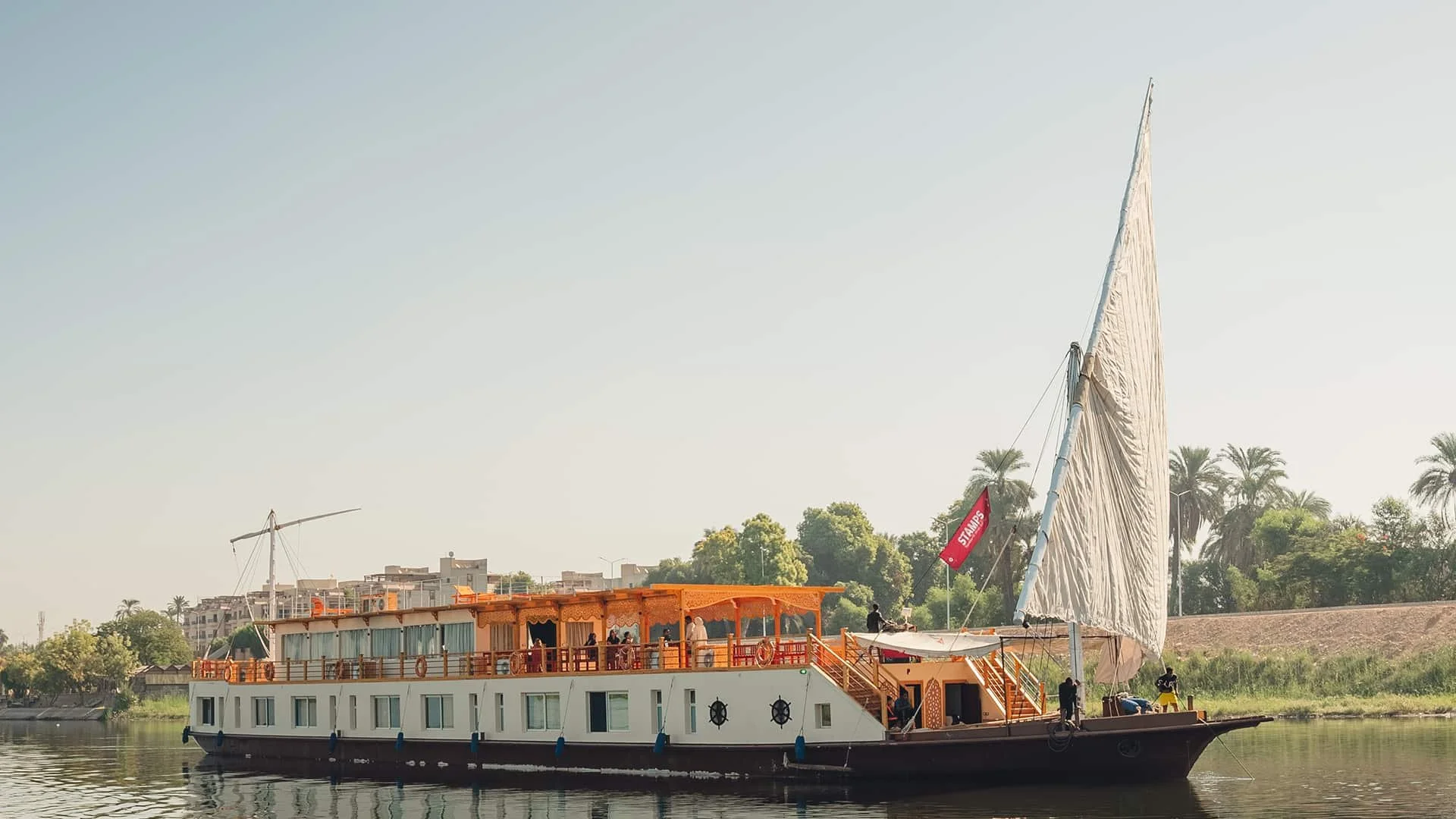
A traditional dahabiya sailing on the Nile
A dahabiya is a traditional Nile sailing boat: two masts, broad lateen sails, a shallow draught, and a handful of cabins. It is the way travellers moved on this river in the nineteenth century, and, for a small number of journeys each year, it is the way we still move now.
The name comes from the Arabic dhahab, gold. The golden barges of Egypt's rulers gave the type its name, and something of that lineage survives in the shape: a long, low profile, a deck built for sitting still, and sails that carry the boat in near silence when the wind agrees.
How a dahabiya differs from a Nile cruise ship
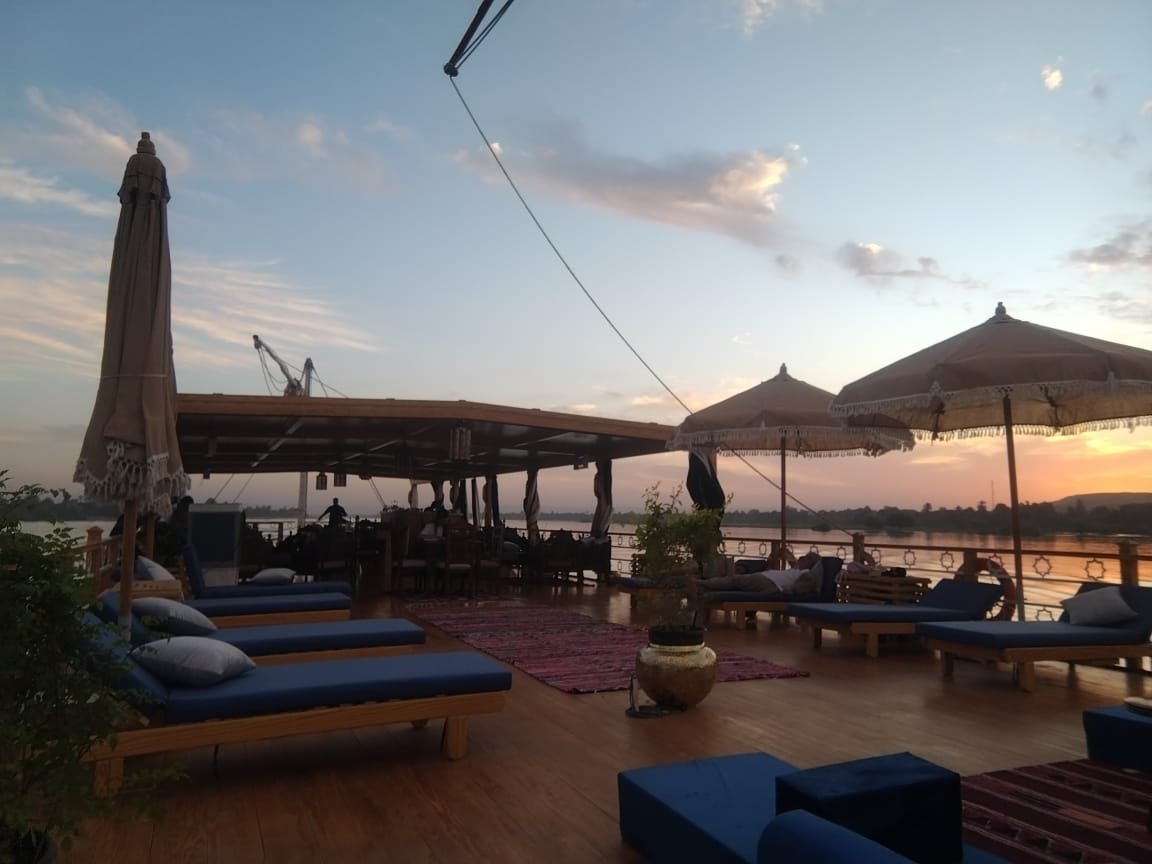
A dahabiya deck
Most visitors who sail the Nile do so on cruise ships, and the difference is not one of degree. It is a different kind of journey.
Scale. A modern cruise ship carries two or three hundred passengers on four or five decks. A dahabiya carries a dozen or two. Aboard ours, there are never more than twenty guests, and the crew comes to know each of them by name within a day.
Sound. Cruise ships run on engines. A dahabiya moves under sail, with a quiet tug to assist when the wind rests, and the difference is what you hear: water, birds, the banks passing. The river becomes audible.
Where it can stop. This is the deciding difference. The big ships moor at concrete docks in the towns, in a line, sometimes rafted several deep. A dahabiya's shallow draught lets it moor almost anywhere: a sandbank, an island, a quiet stretch of sugar-cane field. Sites like El Kaab and the sandstone quarries of Gebel Silsila, which the large ships pass without stopping, are a dahabiya's ordinary afternoon calls. Dinner can be a barbecue on an island with no other boat in sight.
Pace. A cruise ship keeps a schedule measured in ports per day. A dahabiya keeps the river's own pace, and the itinerary breathes: a morning swim, an unhurried temple, tea as the light goes. Nothing about it is rushed, because nothing about it can be.
What the days feel like
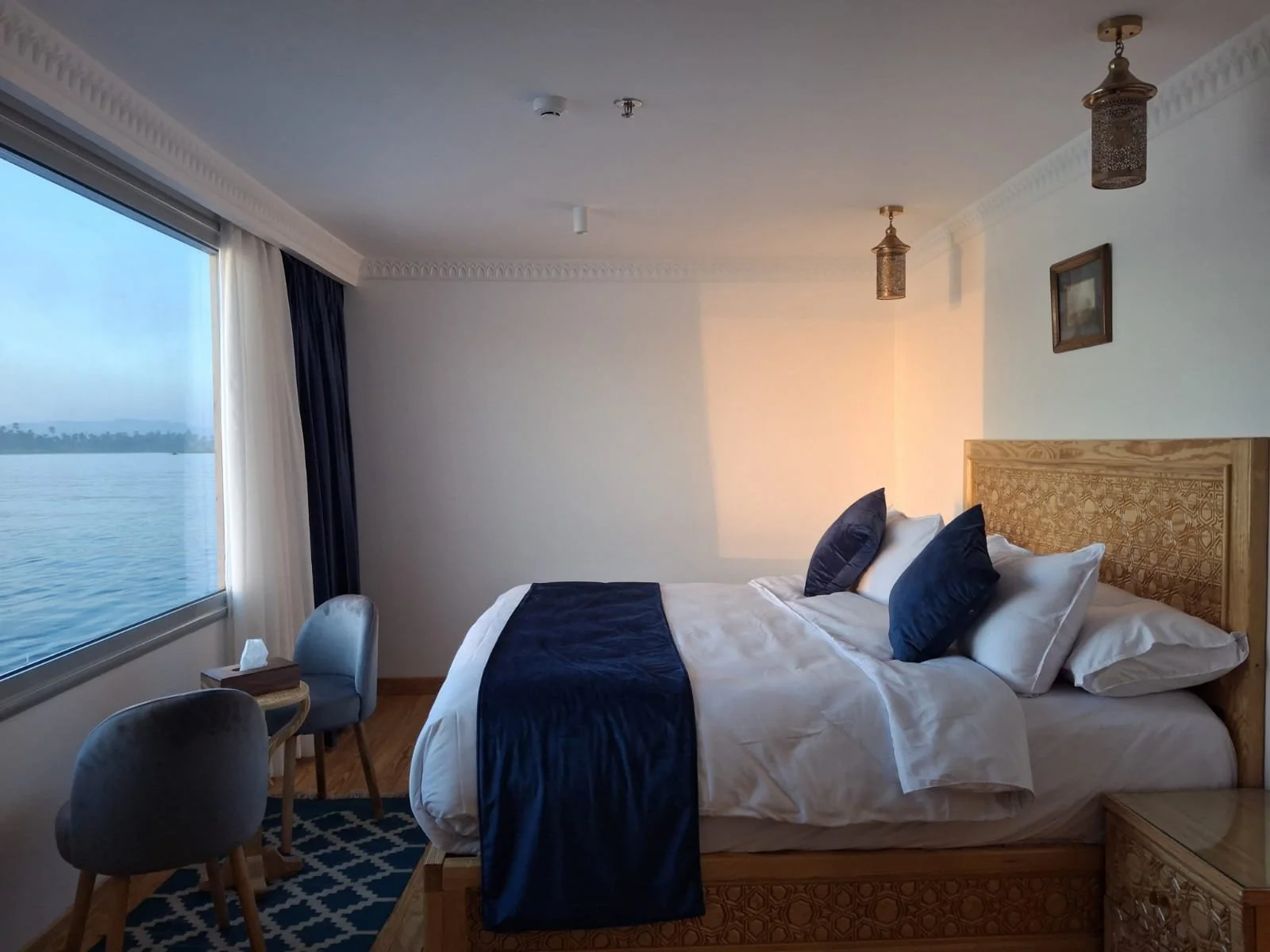
A typical room on a dahabiya
Mornings are for the sites, early, before the heat: a temple reached by horse carriage, tombs cut into a hillside, a village where fishermen still work the way their grandfathers did. Midday belongs to the boat, lunch on board and the banks sliding past. Evenings are the reward: the sun going down behind palms, dinner on deck, and a sky over Upper Egypt that has astonished travellers for as long as there have been travellers.
An Egyptologist sails with the boat, so the temples are read, not just seen. And because twenty people is a gathering rather than a crowd, the journey keeps a quality that larger vessels cannot buy: quiet.
Who a dahabiya suits
Travellers who prefer a house to a hotel tower. People for whom the river is the point, not the corridor between sights. Anyone who has done the big-ship Nile and wondered what it would be like without the queue. It is not the fastest way down the Nile, and it is not trying to be.
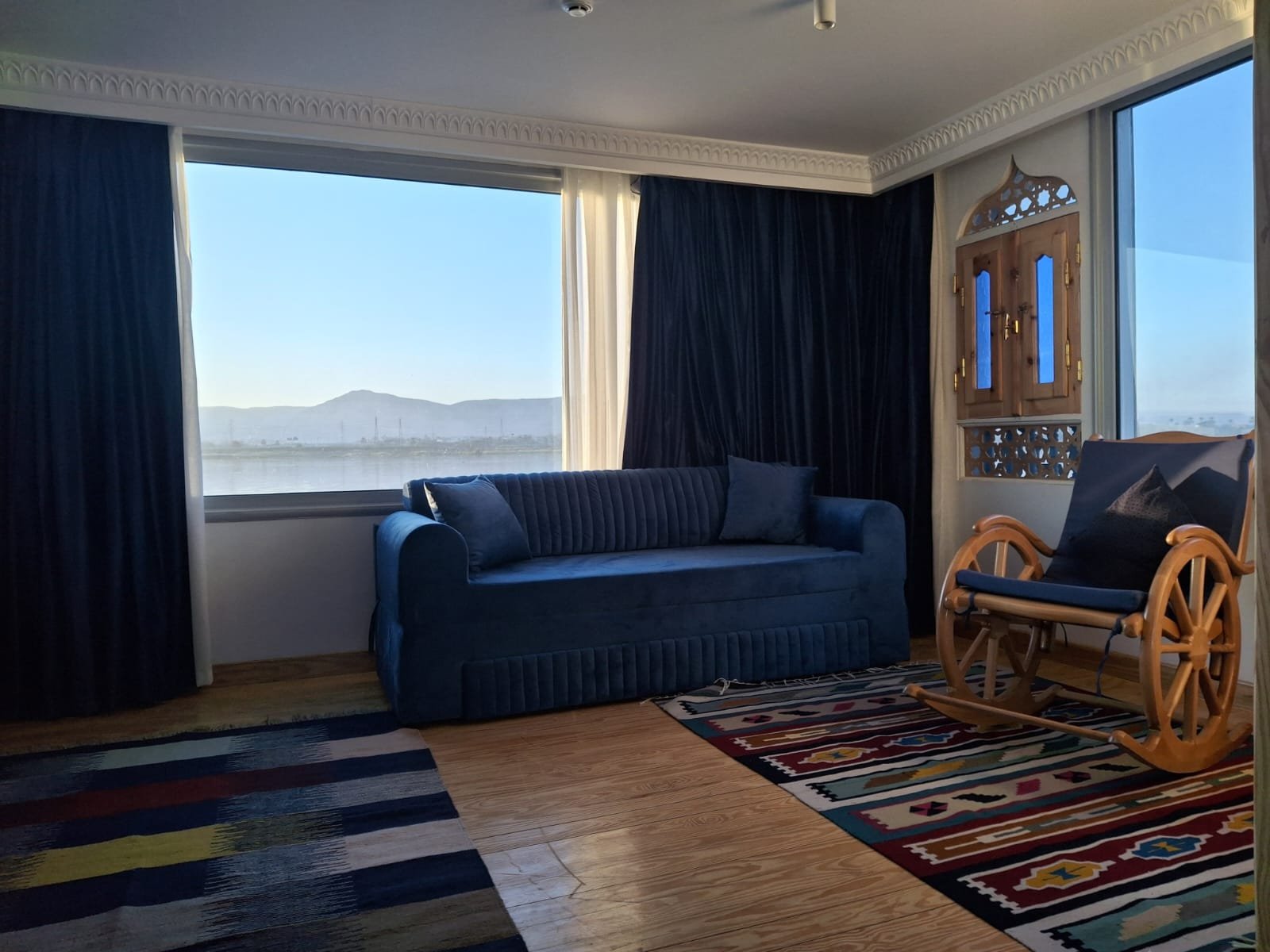
A lounge
Sailing with Nordnile
We charter dahabiyas for a small number of journeys: among them, a five-night sailing from Luxor to Aswan timed to the total solar eclipse of 2 August 2027, when the boat will hold open water near the point of greatest eclipse (the journey is here), and our Nile Soul Voyage yoga retreat each autumn (details here).
If the slow way sounds like your way, we will be glad to have you aboard.
Egypt, with reverence.