Dark Nights
Stargazing in Siwa Oasis, Egypt
Five nights in Egypt's Western Desert, timed to the new moon. A candlelit lodge, a private astronomer, and one of the darkest accessible places in Egypt, on the published light-pollution maps.*
* Source: Falchi et al., World Atlas of Artificial Night Sky Brightness
Reserve a placeThe darkest sky in Egypt
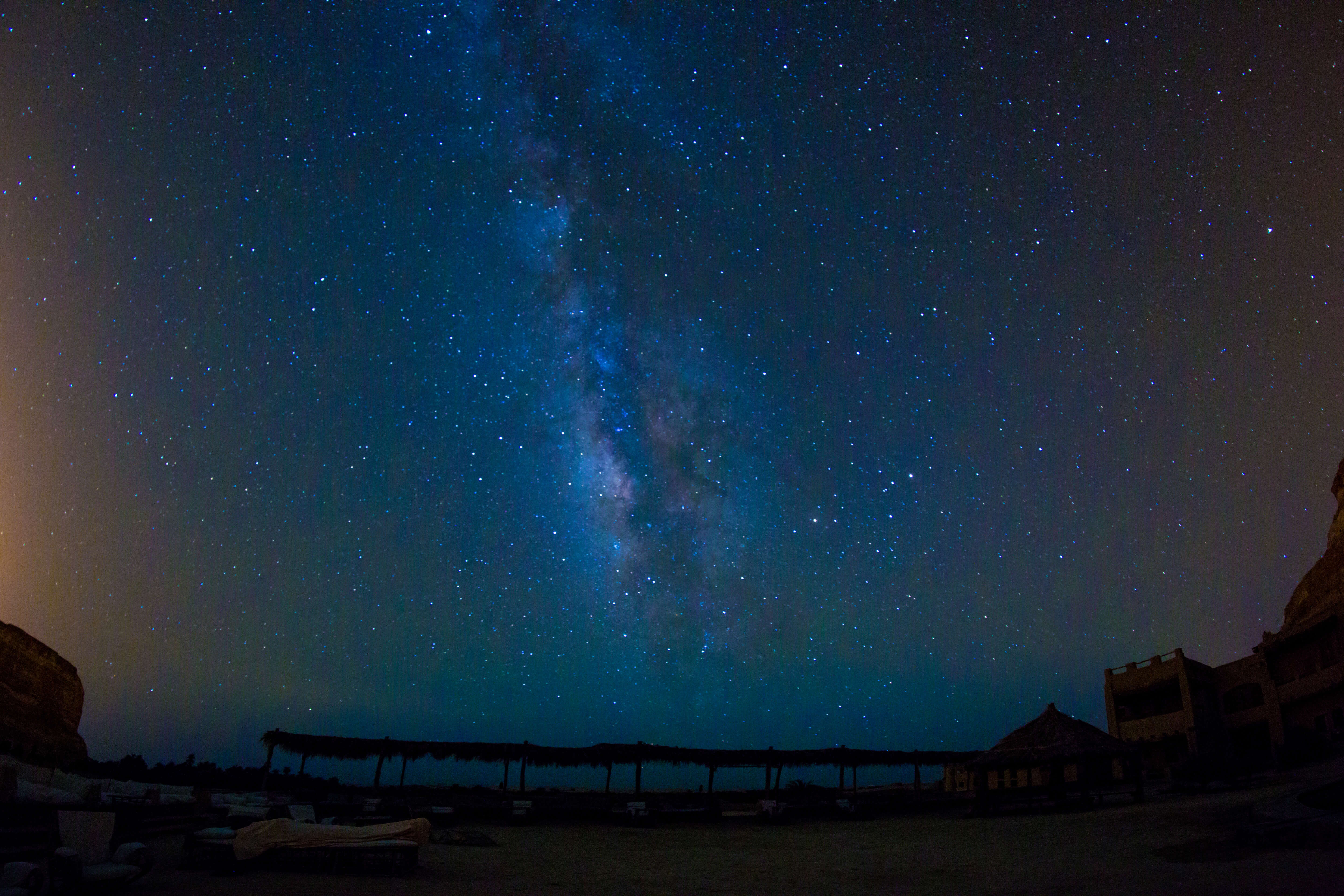
Siwa lies at the edge of the Great Sand Sea, three hundred kilometres from the nearest city light. On the Bortle scale, which measures the darkness of the night sky from nine to one, the desert around the oasis has the lowest class there is.
We travel only in the week of the new moon, when the sky is lit exclusively by the stars. In winter, Orion stands at its highest, and beneath it Sirius, the star ancient Egyptians set their calendar by. The Milky Way is not something you search for here. It is the first thing you see.
Older than its legends
Long before astronomy had a name, Siwa was a place people crossed deserts to reach. Alexander the Great came here in 331 BC to stand before the Oracle of Amun and ask his question. The temple still stands above the palm groves, and the ruined salt-brick town of Shali still rises at the centre of the oasis like something grown rather than built.
By day you will visit the springs, the salt lakes, the gardens, and the quiet streets. By night, you will visit other galaxies.

A lodge lit by candles
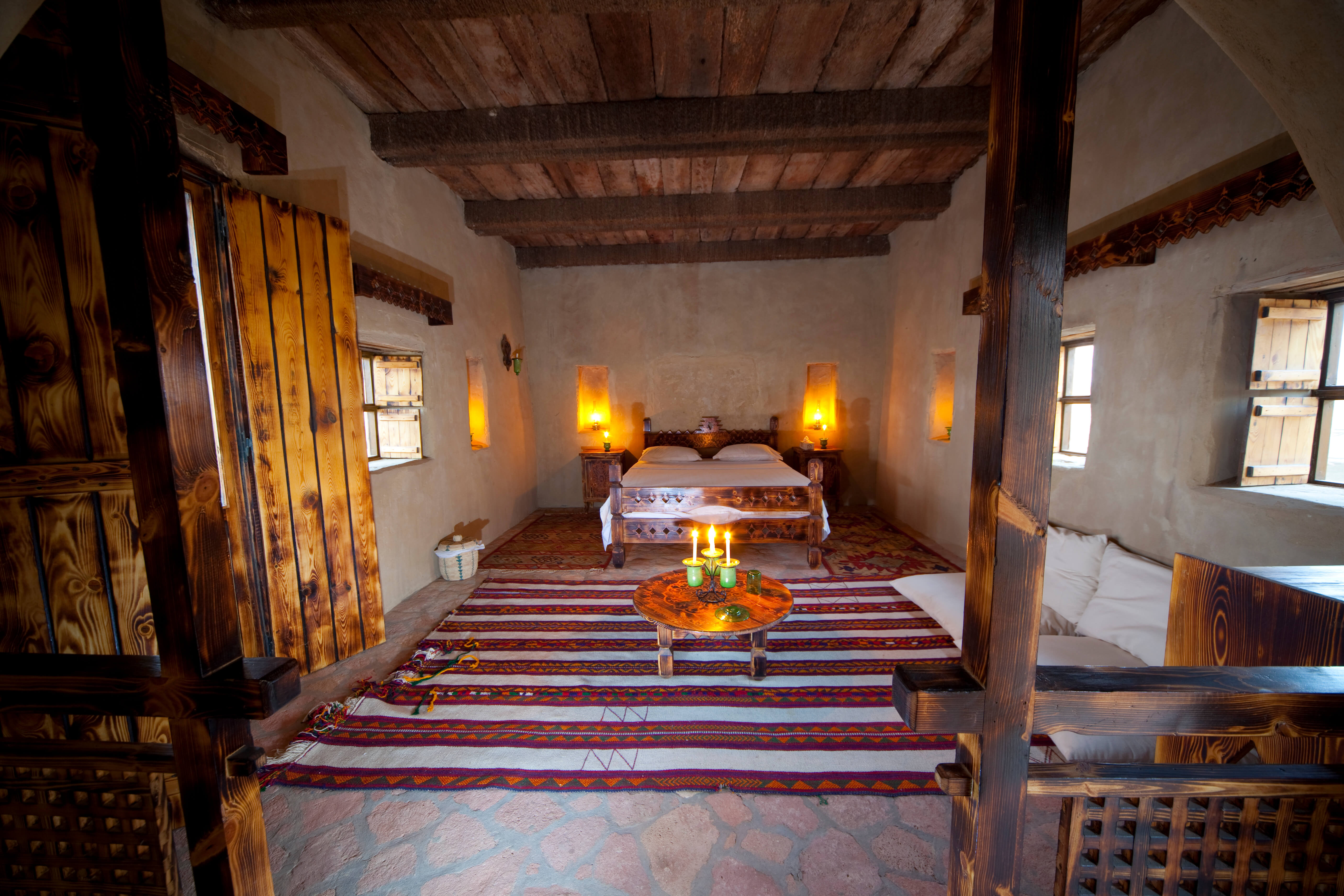
The village where the lodge is located is built by hand from the oasis's own materials, in the old Siwan way, at the foot of the Red Mountain, facing the White Mountain across a lake, with the dunes of the Great Sand Sea within walking distance. There is no electricity in the rooms. Only candles and oil lamps light up the evening, and when night falls, the lodge gently joins the darkness around it.
Most hotels would call this a limitation. For this journey, it is the whole point. The lodge is the observation instrument, in other words: when you step out of your room and the sky is right there waiting.

Five nights, one sky
The road west
A private transfer from Cairo, with a considered stop at El Alamein. The long road is part of the journey: the city thins, the desert opens, and by dusk the palms of the oasis appear. Dinner by lanternlight at the lodge.
The Oracle
Shali fortress and the Temple of the Oracle in the morning light, the salt lakes in the afternoon. After dinner, the first night of sky: no instruments, no lecture. Your astronomer teaches you to see again, with your own eyes.
The Sand Sea
A quiet day among the springs and gardens. At sunset, 4x4s carry the group to the edge of the Great Sand Sea for dinner by the fire and the full horizon-to-horizon sky.
Deeper
A free morning. In the evening, the telescope comes out: the moons of Jupiter, the Orion Nebula, star clusters older than the Sahara. Your astronomer traces the line from Sirius to the calendar of ancient Egypt.
Stillness
Sunset at Fatnas island, over the lake. The final night carries no programme at all: blankets, a fire, and the sky. Some guests talk quietly. Most do not.
Return
A slow breakfast, then the road back to Cairo, arriving by evening.
What the journey carries
Included
- Five nights at our ecovillage, with all meals
- Private transfers from and to Cairo
- A dedicated astronomer, with the group throughout
- All desert excursions, permits and park fees
- Telescope session each night
Not included
- International flights to Cairo
- Nights in Cairo before or after the journey
- Travel insurance
- Gratuities
Across 98 reviews of our journeys, from the Nile to the Western Desert.
Read the reviewsDepartures, set by the moon
Every departure is placed in the week of the new moon, when the nights are at their darkest. The lunar calendar decides the dates. We simply follow it.
Twelve guests at most, and every departure runs, whether two travel or twelve. Rates are quoted in US dollars; euro figures follow the day's exchange. A place is held with a 1250 USD deposit.
PPrivate charter flights from Cairo to Siwa can be arranged upon request for guests who prefer to avoid the road journey.